
Hormonal shifts change everything — how your body stores fat, how well you sleep, how your skin behaves, how much energy you have at three in the afternoon. Yet most of us are still eating the way we did a decade ago, wondering why it no longer seems to work. The reality is that what served you well before may not be enough now, and the adjustments that make the biggest difference are rarely the ones you’d expect. We spent weeks looking at the research, testing what actually holds up and pulling together a practical guide to eating well when your body is asking for something different.
What Hormones Actually Do to Your Metabolism
When estrogen and progesterone begin to decline, the effects reach far beyond your cycle. These hormones are deeply involved in how your body uses energy, where it stores fat and how efficiently it builds and maintains lean tissue. As levels drop, many women find that their midsection thickens, their energy fluctuates without explanation, and their appetite signals become harder to read — even though nothing about their routine has changed.
Thyroid output often slows in tandem, compounding fatigue and making it harder to maintain a healthy weight. Poor sleep — whether triggered by night sweats, racing thoughts or restless patterns — raises cortisol, which in turn amplifies cravings for sugar and starchy comfort foods. None of this is a failure of discipline. It’s a biological shift, and it requires a nutritional response.
Why Protein Needs to Be Higher Now
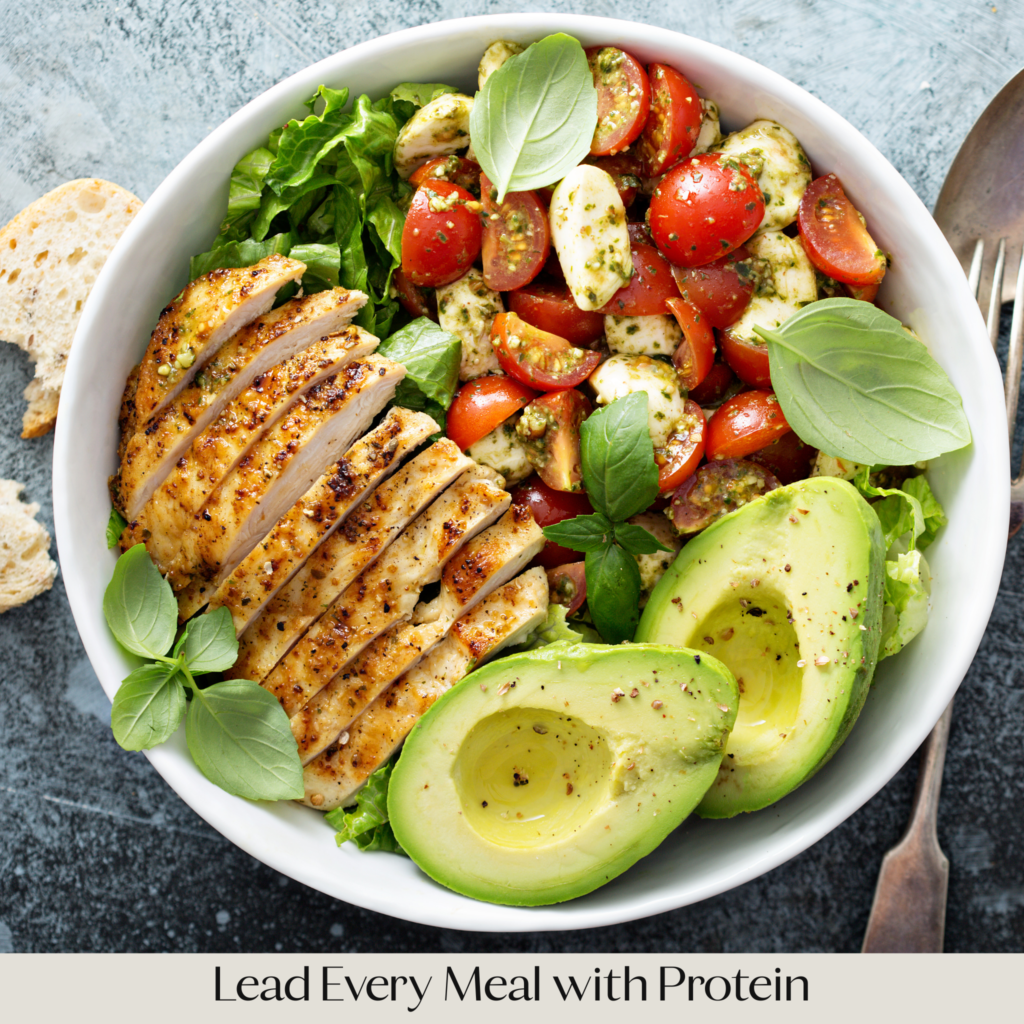
Maintaining muscle mass becomes significantly harder as estrogen declines, making protein more important than ever. Muscle is metabolically active tissue — the more you lose, the slower your metabolism becomes, creating a cycle that’s difficult to reverse. Current research points to a threshold of roughly 25 to 30 grams per meal — the amount needed to meaningfully activate muscle protein synthesis and keep hunger signals in check between meals.
For most people, breakfast is where protein falls shortest. A bowl of oatmeal with fruit delivers around 8 grams — barely a third of what your body needs to trigger any meaningful muscle-preserving response. Adding Greek yogurt, eggs, a handful of nuts or a scoop of collagen can more than double that number without requiring an entirely different meal. Vital Proteins Collagen Peptides dissolves into coffee, oatmeal and smoothies without changing the taste — it’s a quiet way to improve the nutritional profile of meals you’re already making. Beyond breakfast, rotating through lentils, tempeh, sardines, cottage cheese and edamame ensures you’re getting a broad spectrum of amino acids, not just from the same two or three sources.
The Blood Sugar Connection
Hormonal transitions fundamentally alter how your body handles glucose. Where carbohydrates once moved through your system without much fanfare, declining estrogen can reduce insulin sensitivity — meaning the same meals now produce sharper spikes and steeper drops. The result is a familiar pattern: afternoon fatigue, brain fog, irritability and persistent carb cravings that feel impossible to override. Over time, these swings can also encourage fat storage around the midsection, which becomes increasingly resistant to change during this phase.
The fixes are reassuringly simple. Eating protein and fat before carbohydrates at each meal has been shown to reduce glucose spikes significantly — Research from Weill Cornell Medical College, published in Diabetes Care, found reductions of up to 40 percent when vegetables and protein were consumed before carbohydrates. Starting the day with a savory, protein-rich breakfast — eggs with avocado, Greek yogurt with seeds and berries, or a vegetable omelet — sets the tone for stable energy rather than the rollercoaster that follows cereal or toast. Pairing fruit with a source of fat or protein slows sugar absorption, and even a ten-minute walk after eating helps muscles use glucose more efficiently. A regular eating rhythm — meals at roughly the same times each day, with the kitchen closed after dinner — gives your insulin response the consistency it needs to function well.
The biggest mistake is eating the same way you always have, even when your body’s needs have fundamentally changed.
The Four Nutrients Worth Prioritizing
Not all nutrients carry equal weight during this transition, but four consistently rise to the top of the evidence: calcium, magnesium, vitamin D and omega-3 fatty acids. Each plays a targeted role in protecting systems that become more exposed as hormonal levels shift — the skeleton, the brain, the inflammatory pathways that quietly accelerate aging. Without estrogen’s support, the body absorbs calcium less efficiently, making it important to increase dietary intake through foods like yogurt, kale, broccoli, sardines and fortified non-dairy milks. Since vitamin D supports calcium absorption and plays a role in immune function and mood, a daily supplement of 1,000 to 2,000 IU is widely recommended, particularly during the months when sun exposure is limited. Magnesium is one of the most common deficiencies and arguably the most impactful to address. It plays a role in over 300 enzymatic reactions — from nervous system regulation and muscle recovery to the biochemistry of sleep. Dietary sources include spinach, Swiss chard, cashews, black beans and cacao, but many women find supplementation helpful during this phase. Natural Vitality Calm is a magnesium citrate powder that dissolves into water — we’ve found it especially useful as part of an evening wind-down routine, where the calming effect on the nervous system is most noticeable.
Finally, don’t underestimate the role of fat. Omega-3s — found in salmon, mackerel, sardines, chia seeds and hemp hearts — are among the most effective dietary tools for managing the low-grade inflammation that tends to increase during hormonal change. Two to three portions of oily fish per week is the standard recommendation. Beyond omega-3s, generous daily use of olive oil, avocado and raw nuts provides the building blocks your body needs for hormone production. This is not the time to go low-fat — your endocrine system depends on it.
Your Gut Microbiome Matters More Now
Hormonal transitions reshape the gut’s bacterial landscape in ways that affect far more than digestion. A specialized subset of gut bacteria known as the estrobolome is directly responsible for metabolizing estrogen — when this community falls out of balance, it can disrupt hormonal equilibrium, immune function, skin clarity and emotional stability. Supporting your microbiome during this phase isn’t a wellness trend. It’s a physiological priority.
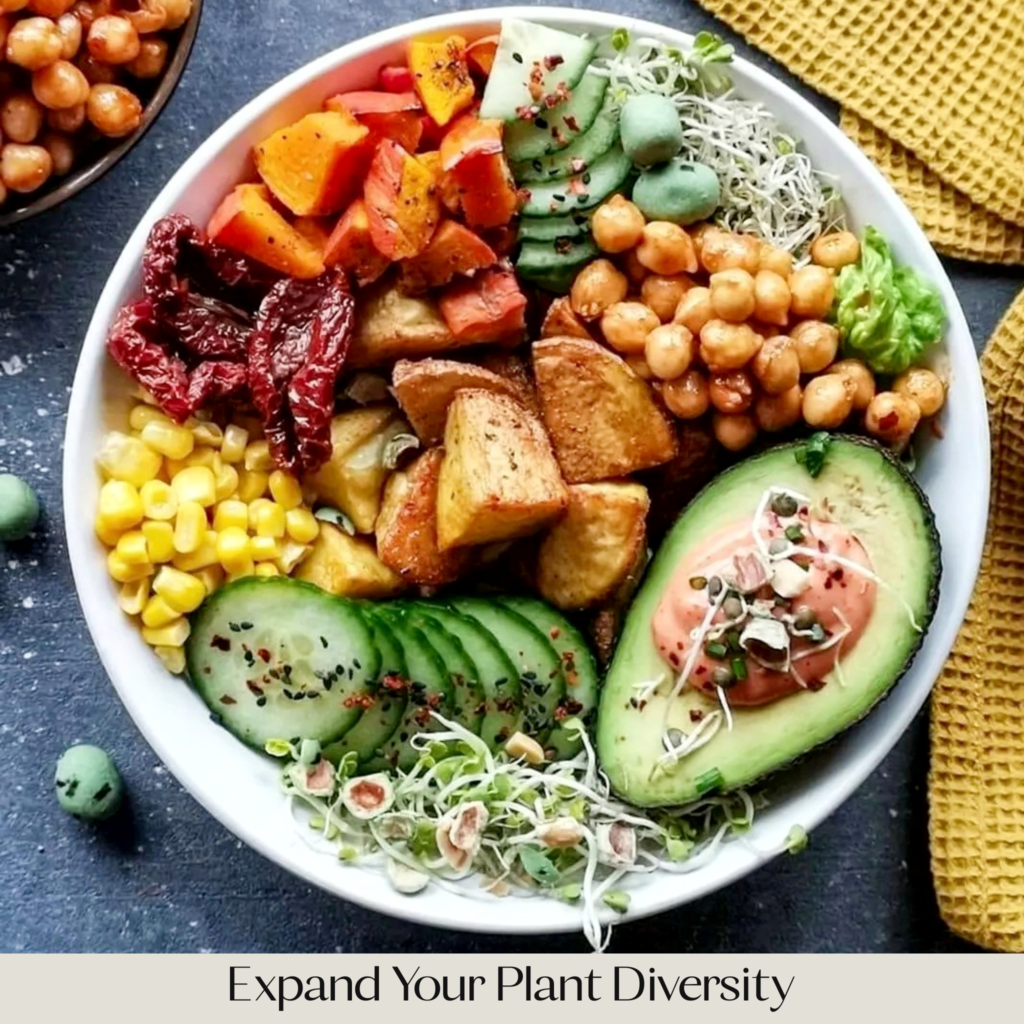
The simplest way to support your gut is through dietary diversity. A landmark 2018 study published in mSystems by the American Gut Project — one of the largest citizen science microbiome studies, with over 10,000 participants — found that people who eat 30 or more different plant foods per week have significantly more diverse microbiomes than those who eat fewer than 10. Fermented foods are the other pillar. A 2021 Stanford School of Medicine study published in Cell found that a diet high in fermented foods increased microbiome diversity and reduced 19 inflammatory markers more effectively than a high-fiber diet alone. Natural yogurt with live cultures, kefir, sauerkraut, kimchi and miso are the most accessible options. Even a tablespoon of sauerkraut alongside a meal makes a real difference when it becomes a daily habit.
Most adults consume around half the recommended 30 grams of fiber per day. Organic India Whole Husk Psyllium stirred into oatmeal or water is a simple way to close the gap — it’s a clean, single-ingredient fiber supplement we’ve kept in rotation for months. A quality daily probiotic like Culturelle, built around Lactobacillus rhamnosus GG (one of the most extensively studied probiotic strains), is worth considering if you want more targeted support.
Small Shifts, Lasting Results
Overly restrictive diets backfire, especially during hormonal change. The shifts that make the biggest difference are the ones that integrate naturally into what you’re already doing. Here are the changes we’ve found most impactful — and most sustainable.